Born To Run
An article/review from NST, 5 May 2011. A good reading book for runner or jogger.
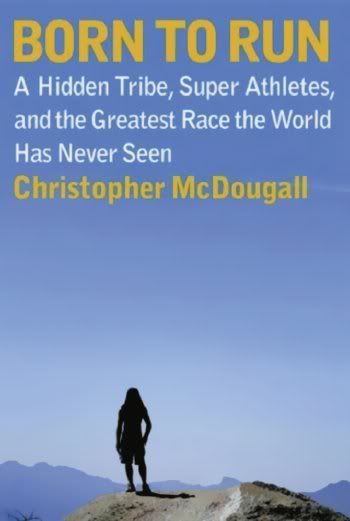

Christopher McDougall’s book, Born to Run, is in a class of its own and nothing short of spectacular. It will enter the annals of sports as one of the best books on running.
NOT many people have heard of the Tarahumara Indians who lived in the wild, impenetrable, mysterious Barrancas del Cobre (Copper Canyons) of Mexico.
Christopher McDougall was on an assignment in Mexico when he heard about the legendary people. He heard about a Tarahumara runner who ran 696km -- almost the entire length of the North-South Expressway! Another ran the distance of a full 12 marathons in one stretch. The Greek soldier who ran to warn his people of an enemy's impending advance would have rolled in his grave upon hearing this. McDougall searched for them and came out with a book, Born To Run, and also about an elite group of ultra-runners who aspired to be like them.
There have always been great stories about the running tribes -- those who run a hundred kilometres without sweating too much. These are like the Sherpas of the Himalayas, whose bodies are made for climbing and to acclimatise naturally to heights. There are legends about the Goshuttes and Papago tribes of the American West, the Kalahari Bushmen of Botswana, the Aborigines of Australia, the Masai of Kenya and the Seri Indians of Mexico. And, of course, the little known Tarahumara Indians. They are born to run, the Natural Born Runners, the Shoalin monks of running.
McDougal's book is in a class of its own and nothing short of spectacular. It will enter the annals of sports as one of the best books on running. It all started when he wanted to find out why his foot hurt when running. He posed that question to some of the best minds in sports science and medicine.
He learnt more about the Tarahumara Indians who seldom hurt themselves even when running in the wild. They have in fact run in the Olympics. They competed in the 1928 Olympics (in Amsterdam) and in the 1968 Olympics (in Mexico) but they lost. Probably the distance of about 42km for the marathon was too short for them. They were largely forgotten.
So when the Leadville Trail 100 organisers brought in five Tarahumara runners to join the best long distance endurance runners in 1992, everyone was sceptical. The winner, Victoriano, left the first non-Tarahumara finisher a full hour behind. Leadville is a small former mining town high on the Colorado Rockies. Next year, another Tarahumara won. The running fraternity was ablaze with excitement. Who are these people?
McDougall narrates the story of Dr David Carrier, a professor of biology who believes that these people represent the natural "us" -- the hunter-gatherer instinct in us. Their incredible ability to run long distances is spectacular, but not entirely impossible.
He has a theory -- that in the old days humans had to outrun animals to eat them. He went to the Wyoming plains with his brother to prove the theory. They did not catch an antelope, though. Then he heard about Louis Liebenberg's experience with the Bushmen of the Kalahari. In his The Art of Tracking: The Origin of Science, he stressed the mental demands of the hunt more than the physical ones. They have to be excellent runners, yes, but they should know more about pacing, strategy and when to pounce. The hunters of old did not tire the animals. They outwitted them. The Bushmen thought us valuable lessons about survival. And the value of a good run. Sounds like running a corporation, right?
Carrier and Liebenberg are just two experts who extol the need for humans to re-look at themselves when technology and advancement in the sciences have made "lazing around" a way of life. As one researcher aptly puts it, we have taken "our sinewy, durable, hunter-gatherer bodies and plunked them into an artificial world of perpetual leisure". In short, we have become too lazy even to exercise 15 minutes a day or a few hours a week. Our lifestyles have made us the laziest beings on Planet Earth.
According to these experts we are a machine built to run. Our foot's arch is a high-tensile web of 26 bones, 33 joints, 12 rubbery tendons and 18 muscles. It stretches and flexes like an earthquake-resistant suspension bridge. It is supposed to be the greatest weight-bearing design ever invented. In fact, the arch of the foot is meant for running. With that arch, humans had to outrun animals long before spears and bows and arrows came into play.
I find McDougall's book interesting, and stories about runners fascinate me. I am not just talking about those speed demons who blast the tape below 10 seconds in the 100-metre dash. Or those who run perfect marathons leaving lesser mortals heaving and gasping for air, a full four hours after they hit the tape. Or the legends of Harold Abrahams and Eric Liddell made famous by the movie Chariots of Fire.
The world was transfixed by Abebe Bikila, the Ethiopian who won the marathon, barefooted, in the Tokyo Olympics in 1964. And the incredible competition between two Britons, Sebastian Coe and Steve Ovett in the 1970s and the 80s. But names like Kipchoge Keino, Naftali Temu, Mamoi Wolde, Kenesisa Bekele, Haile Gebrselassie, Ezekiel Kembo and Hicham el-Guerrouj have made the Africans famous for middle and long-distance running.
And, of course, there is the story of Emil Zatopek who ran just for the love of, what else, running. The soldier from former Czechoslovakia simply ran at any time, sometimes covering 32km in the woods at night or even carrying his wife on his back while doing so. He had no formal training, no coach and no regime to attend to. As reported in one of the books on running, during a manic stretch in the 1940s, he raced nearly every other week for three years and never lost! He arrived in the 1952 Helsinki Olympics almost an unknown.
He raced the first event, the 5,000 metres, and broke the Games record. He later raced the 10,000 metres, again he won and broke another record. He decided to run the marathon. Legend has it that as the world record holder, Jim Peters of New Zealand, was enjoying his pace, Zatopek pulled alongside him, inquiring if the pace was too fast or too slow. "Too slow", said the bewildered New Zealander. Zatopek thanked him and took off, winning the gold and leaving Peters in the dust.
It was many years later that McDougall was able to see the best ultra runners racing in Copper Canyons against the Tarahumara Indians in their own backyard. It was a race never covered by any of the sports channels. It was the greatest race unknown to man, meant for the best among the best, pitting the elite among the natural runners of Copper Canyons.
Read the book to find out who won!
..from Aiman Cheah.
Christopher McDougall’s book, Born to Run
, is in a class of its own and nothing short of spectacular. It will enter the annals of sports as one of the best books on running.NOT many people have heard of the Tarahumara Indians who lived in the wild, impenetrable, mysterious Barrancas del Cobre (Copper Canyons) of Mexico.
Christopher McDougall was on an assignment in Mexico when he heard about the legendary people. He heard about a Tarahumara runner who ran 696km -- almost the entire length of the North-South Expressway! Another ran the distance of a full 12 marathons in one stretch. The Greek soldier who ran to warn his people of an enemy's impending advance would have rolled in his grave upon hearing this. McDougall searched for them and came out with a book, Born To Run, and also about an elite group of ultra-runners who aspired to be like them.
There have always been great stories about the running tribes -- those who run a hundred kilometres without sweating too much. These are like the Sherpas of the Himalayas, whose bodies are made for climbing and to acclimatise naturally to heights. There are legends about the Goshuttes and Papago tribes of the American West, the Kalahari Bushmen of Botswana, the Aborigines of Australia, the Masai of Kenya and the Seri Indians of Mexico. And, of course, the little known Tarahumara Indians. They are born to run, the Natural Born Runners, the Shoalin monks of running.
McDougal's book is in a class of its own and nothing short of spectacular. It will enter the annals of sports as one of the best books on running. It all started when he wanted to find out why his foot hurt when running. He posed that question to some of the best minds in sports science and medicine.
He learnt more about the Tarahumara Indians who seldom hurt themselves even when running in the wild. They have in fact run in the Olympics. They competed in the 1928 Olympics (in Amsterdam) and in the 1968 Olympics (in Mexico) but they lost. Probably the distance of about 42km for the marathon was too short for them. They were largely forgotten.
So when the Leadville Trail 100 organisers brought in five Tarahumara runners to join the best long distance endurance runners in 1992, everyone was sceptical. The winner, Victoriano, left the first non-Tarahumara finisher a full hour behind. Leadville is a small former mining town high on the Colorado Rockies. Next year, another Tarahumara won. The running fraternity was ablaze with excitement. Who are these people?
McDougall narrates the story of Dr David Carrier, a professor of biology who believes that these people represent the natural "us" -- the hunter-gatherer instinct in us. Their incredible ability to run long distances is spectacular, but not entirely impossible.
He has a theory -- that in the old days humans had to outrun animals to eat them. He went to the Wyoming plains with his brother to prove the theory. They did not catch an antelope, though. Then he heard about Louis Liebenberg's experience with the Bushmen of the Kalahari. In his The Art of Tracking: The Origin of Science, he stressed the mental demands of the hunt more than the physical ones. They have to be excellent runners, yes, but they should know more about pacing, strategy and when to pounce. The hunters of old did not tire the animals. They outwitted them. The Bushmen thought us valuable lessons about survival. And the value of a good run. Sounds like running a corporation, right?
Carrier and Liebenberg are just two experts who extol the need for humans to re-look at themselves when technology and advancement in the sciences have made "lazing around" a way of life. As one researcher aptly puts it, we have taken "our sinewy, durable, hunter-gatherer bodies and plunked them into an artificial world of perpetual leisure". In short, we have become too lazy even to exercise 15 minutes a day or a few hours a week. Our lifestyles have made us the laziest beings on Planet Earth.
According to these experts we are a machine built to run. Our foot's arch is a high-tensile web of 26 bones, 33 joints, 12 rubbery tendons and 18 muscles. It stretches and flexes like an earthquake-resistant suspension bridge. It is supposed to be the greatest weight-bearing design ever invented. In fact, the arch of the foot is meant for running. With that arch, humans had to outrun animals long before spears and bows and arrows came into play.
I find McDougall's book interesting, and stories about runners fascinate me. I am not just talking about those speed demons who blast the tape below 10 seconds in the 100-metre dash. Or those who run perfect marathons leaving lesser mortals heaving and gasping for air, a full four hours after they hit the tape. Or the legends of Harold Abrahams and Eric Liddell made famous by the movie Chariots of Fire.
The world was transfixed by Abebe Bikila, the Ethiopian who won the marathon, barefooted, in the Tokyo Olympics in 1964. And the incredible competition between two Britons, Sebastian Coe and Steve Ovett in the 1970s and the 80s. But names like Kipchoge Keino, Naftali Temu, Mamoi Wolde, Kenesisa Bekele, Haile Gebrselassie, Ezekiel Kembo and Hicham el-Guerrouj have made the Africans famous for middle and long-distance running.
And, of course, there is the story of Emil Zatopek who ran just for the love of, what else, running. The soldier from former Czechoslovakia simply ran at any time, sometimes covering 32km in the woods at night or even carrying his wife on his back while doing so. He had no formal training, no coach and no regime to attend to. As reported in one of the books on running, during a manic stretch in the 1940s, he raced nearly every other week for three years and never lost! He arrived in the 1952 Helsinki Olympics almost an unknown.
He raced the first event, the 5,000 metres, and broke the Games record. He later raced the 10,000 metres, again he won and broke another record. He decided to run the marathon. Legend has it that as the world record holder, Jim Peters of New Zealand, was enjoying his pace, Zatopek pulled alongside him, inquiring if the pace was too fast or too slow. "Too slow", said the bewildered New Zealander. Zatopek thanked him and took off, winning the gold and leaving Peters in the dust.
It was many years later that McDougall was able to see the best ultra runners racing in Copper Canyons against the Tarahumara Indians in their own backyard. It was a race never covered by any of the sports channels. It was the greatest race unknown to man, meant for the best among the best, pitting the elite among the natural runners of Copper Canyons.
Read the book to find out who won!
..from Aiman Cheah.
Labels: review